Electric kayaks: choose assistance and plan the return
Understand an electric kayak's motor and battery, compare it with a pedal kayak, and prepare a rental around controls, practical endurance and a realistic return plan.
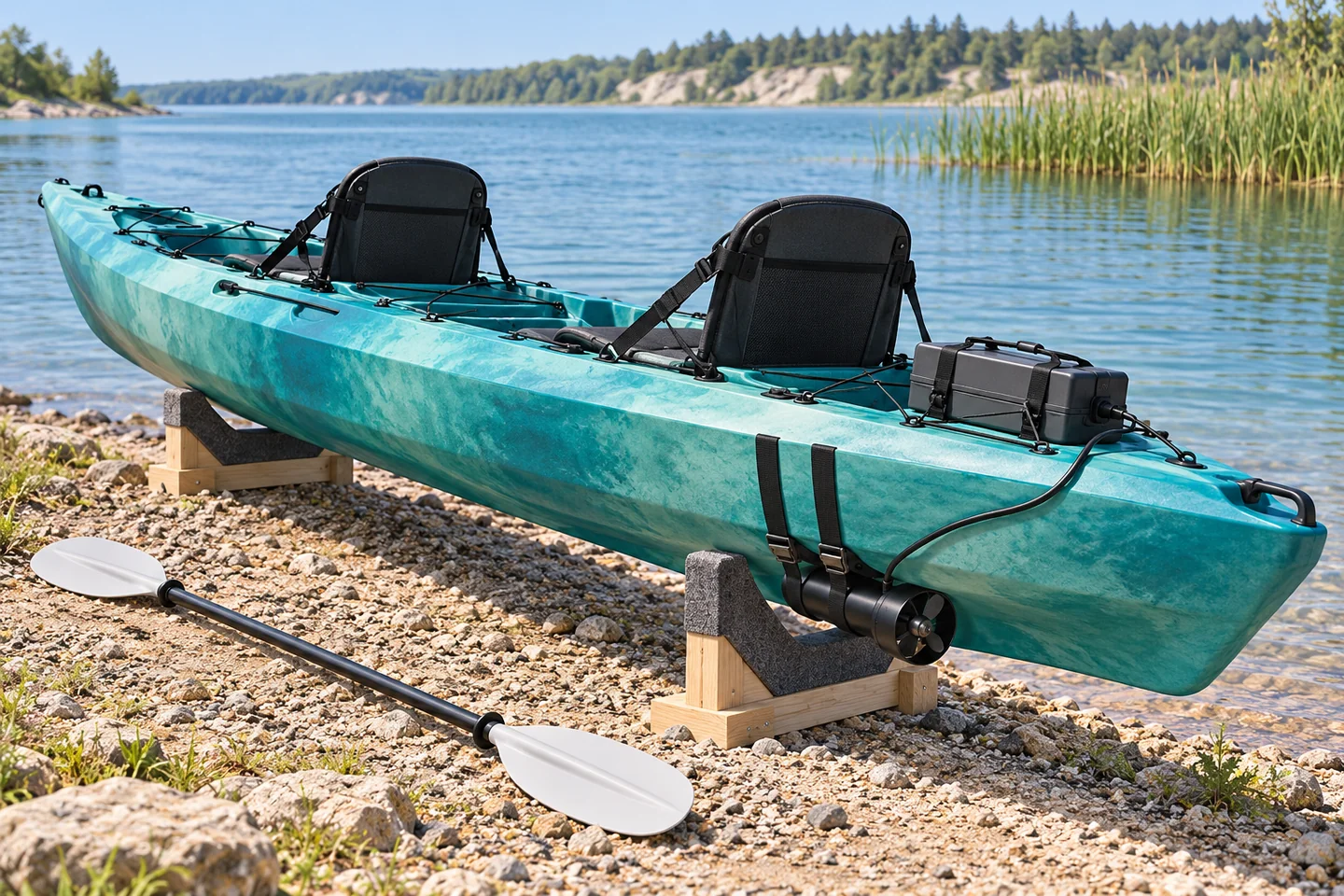
An electric kayak uses a battery-powered motor for propulsion or assistance. Some kayaks are designed around a motor; others receive a compatible removable unit. The arrangement can include a submerged propulsion unit, separate battery and a hand control. Do not assume that a kayak advertised with an electric option arrives with that option fitted. Ask what is included in your specific booking.
The motor is the defining feature
A pedal kayak is different: your legs mechanically drive fins or a propeller. It may also be fitted with a motor, but pedals alone do not make it electric. An ordinary paddle kayak relies on paddle strokes. These distinctions matter when you are comparing effort, seated comfort, equipment handling and how you would return if your preferred drive were unavailable.
Understand the whole system before launching
Ask the operator to identify the battery, motor control, emergency stop and any steering device. Have them demonstrate starting at low power, stopping and securing the system. Learn which direction settings are available and whether steering uses a rudder, paddle or another control. A small remote that changes thrust does not necessarily steer the kayak.
Practise a short circuit within the approved area. Turn both ways, approach the landing slowly and try the operator's procedure for moving without motor assistance. Keep the paddle accessible when one is supplied. Know how to call for help and what you should do if the motor stops. Do not open battery cases, disconnect unfamiliar wiring or attempt repairs afloat.
Endurance is a planning question
Published battery figures describe particular testing conditions, not a guaranteed outing for every renter. Load, power setting, wind, current and the actual battery affect practical endurance. Ask how long the operator permits this setup to run, where you must turn around and how much reserve they require. Plan the return before deciding how far to go.
A motor can reduce paddling effort, but it does not remove the need for a suitable water area or weather judgement. Start with a conservative loop and a clear turnaround time. Check the route again if conditions change. A comfortable outward leg can hide a more demanding return, particularly when wind or current initially helps you travel away from the base.
An operator example with a specific option
Adrenalin Kite Area, whose site identifies Tarifa in Spain, lists two-seat sea-kayak rental with an optional Vaquita electric motor in its 2026 pricelist. This is evidence of a particular motor option, not of electric propulsion on every kayak. Ask the operator to confirm the current departure location, fitted equipment and conditions for the session you want.
The distinction between optional and included matters when comparing offers. Ask whether the motor must be reserved separately, whether both passengers receive the briefing and how equipment is fitted at launch. Seasonal opening and weather restrictions may affect departures. Confirm the complete arrangement directly rather than using an old price page as a live availability calendar.
Choose an outing you can manage
Check seat comfort, entry and exit, permitted load and how the motor changes shallow-water access. Have the operator explain the minimum depth and landing procedure for the propulsion unit. Keep clear of swimmers and fishing lines, reduce speed around other craft and respect any restrictions on motor use. Secure belongings without covering controls or safety equipment. Quiet propulsion is still motor propulsion, and responsible navigation means leaving wildlife, vegetation and other water users enough space throughout the trip.
Check which passenger operates the controls in a tandem arrangement before leaving.
Does electric mean no paddling at all?
It depends on the fitted system and session. Ask whether the motor provides assistance or normal propulsion, and practise the supplied backup procedure before departure.
Is a pedal kayak the same thing?
No. A pedal drive uses your legs. A kayak with an electric motor uses a battery, whether or not the hull also has pedals.
Can I book a universal battery range?
No. Ask about the actual kayak, load, conditions, permitted duration and return reserve. General manufacturer figures do not guarantee rental endurance.
Check before booking
- Confirm the motor is included.
- Identify thrust control and steering separately.
- Agree the return reserve.
- Learn the shallow-water landing procedure.
Sources and references
Sources consulted on