Pedal kayaks: comfort, propulsion and your first outing
See how a pedal kayak moves, compare fins and propellers, and prepare a first rental with useful questions about seating, water depth, steering and the return journey.
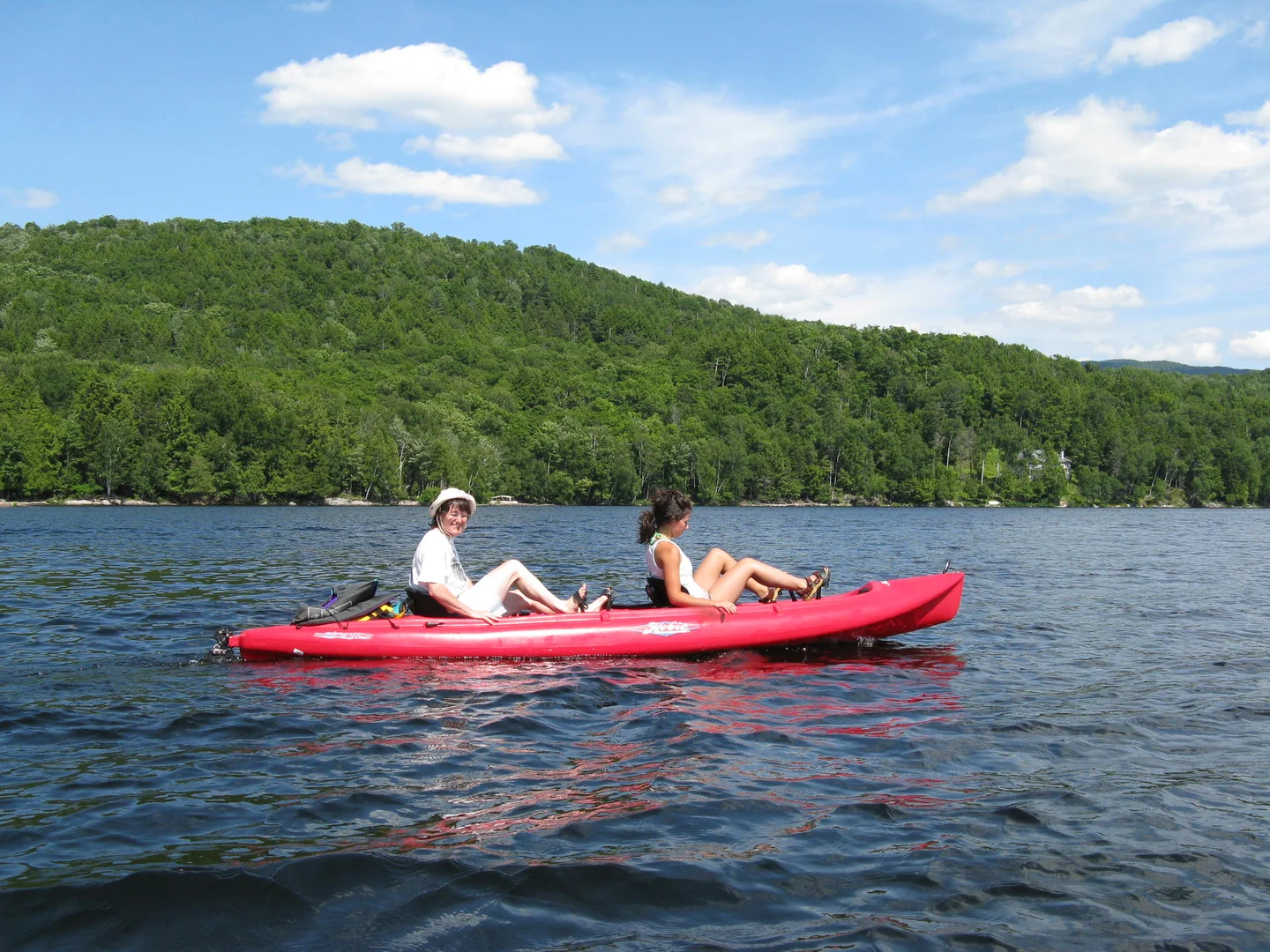
A pedal kayak uses your legs to drive a mechanism beneath the hull. Depending on the model, that mechanism moves fins or turns a propeller. It is human-powered unless a separate electric motor is fitted. The word pedal describes the drive, not a particular hull shape or a promise that every rental kayak handles alike. Ask which system the operator supplies and how it is controlled.
Your legs provide the power
This changes the experience from a paddle kayak. You can maintain movement without a continuous paddle stroke, which may appeal to photographers or people who enjoy steady leg exercise. Your hands are not automatically free at every moment: steering, keeping a lookout and handling changing conditions still require attention. Keep the paddle available if it is part of the operator's equipment.
Start with the seat, not the distance
Before launching, adjust the seat and pedals with the operator. You should be able to complete the movement comfortably without reaching or locking your knees. Check how to enter and leave the kayak and where loose belongings can be secured. A short fitting session can reveal more about comfort than a long list of advertised features.
On the water, practise moving slowly, turning both directions and stopping the pedal action. Learn whether the particular drive offers reverse and how to engage it; reversing is not universal. Ask how the rudder responds when you are barely moving. Try using the paddle as instructed, so that you have another practical way to manoeuvre if the pedal drive must be raised.
Water depth changes the plan
The drive extends below the hull, so shallow water deserves special attention. Ask the operator to demonstrate lifting, stowing or protecting the system before you reach the beach. Do not experiment with unfamiliar release mechanisms among rocks or swimmers. Vegetation, fishing line and submerged obstacles can also affect where it is sensible to pedal.
Choose an initial route with straightforward access and room to turn. A pedal kayak can be a comfortable touring platform, but wind and currents still affect the hull and the return effort. Your legs may tire differently from your arms. Schedule breaks and a conservative turnaround rather than treating an unfamiliar propulsion system as permission to cover a much greater distance.
A concrete rental example in Cannes
One Fish advertises pedal-kayak rentals in Cannes and describes a fin-based drive on its website. The operator also identifies a launch in the Moure Rouge area. This gives you a specific place to investigate when comparing sea outings. It does not mean every kayak around Cannes has pedals or that all island routes are suitable for a first session.
Ask which itinerary is approved for your level and the day's conditions. A destination mentioned by an operator is not a route recommendation for every renter. Confirm current opening arrangements, the exact meeting point, the supplied communication equipment and how the rental changes if weather prevents the planned departure. Seasonal services should be checked again before you travel.
Questions that make comparison useful
Compare the seat fit, drive system, permitted load, solo or tandem layout and arrangements for launching. Ask whether instruction is included and how you request assistance. For fishing or photography, check applicable local permissions and keep equipment from blocking movement. Give wildlife space and avoid pedalling through shallow vegetation. Leave the beach as you found it, and use the landing areas agreed with the operator rather than dragging an exposed drive across the bottom.
Is a pedal kayak electric?
Pedals usually supply human power to fins or a propeller. A kayak becomes motor-assisted only if it also has a motor; check the actual rental specification.
Can every pedal kayak go backwards?
No. Reverse operation depends on the drive. Ask for a demonstration on the kayak supplied, including how steering behaves at low speed.
Can I approach the beach while pedalling?
Follow the operator's depth instructions and lift or secure the drive as demonstrated. The hull floating does not mean the mechanism below it has enough clearance.
Check before booking
- Adjust the seat and pedal reach.
- Check fins or propeller and reverse.
- Practise raising the drive.
- Keep the supplied paddle accessible.
Sources and references
Sources consulted on