Packraft rental: plan your first paddle and walk
Carry a lightweight boat between trails and water with a packraft. Learn how to choose a first rental, plan the route and compare published rental offers before booking.
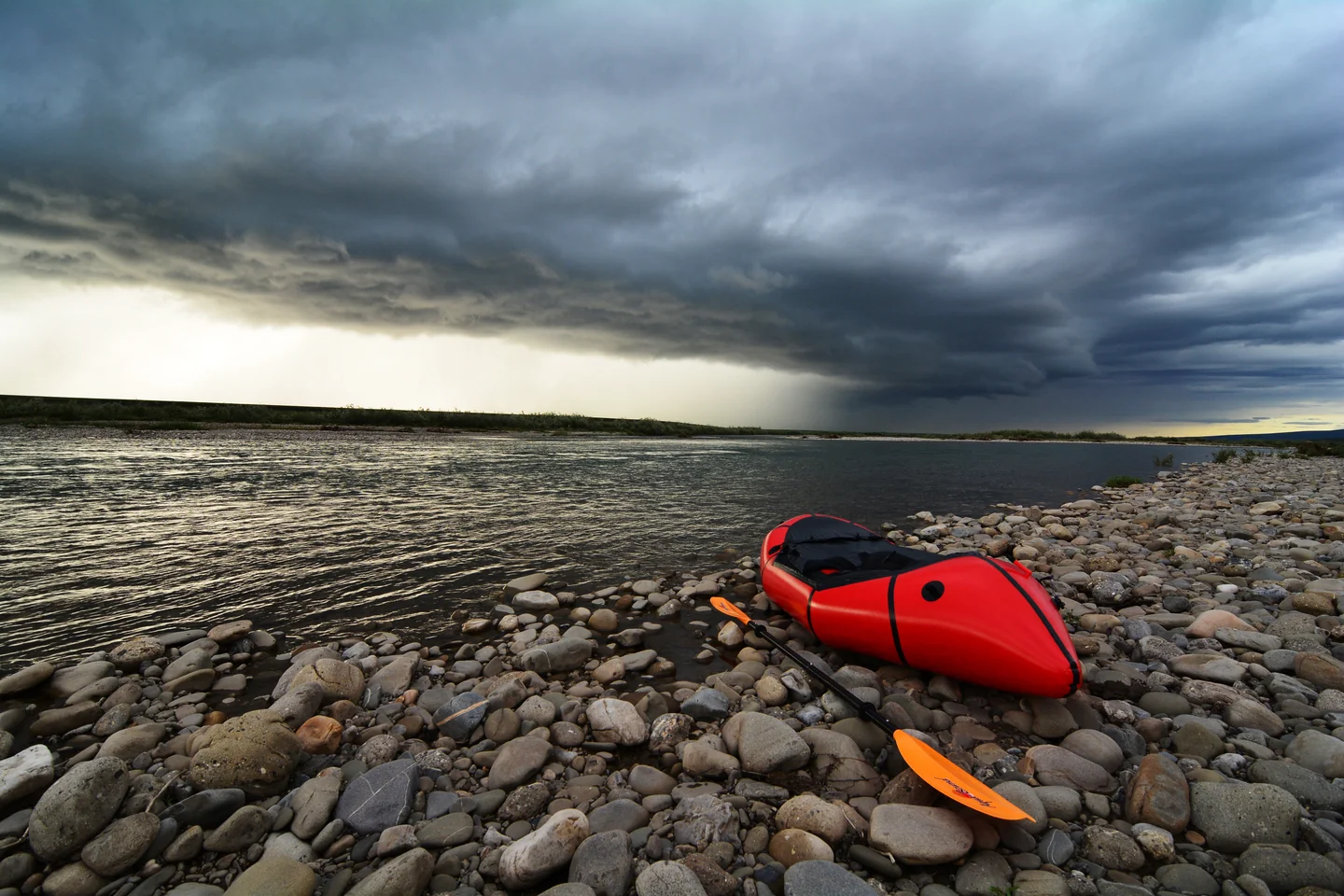
A packraft is a small inflatable boat designed to pack down for carrying between stretches of water. You normally propel it with a double-bladed paddle. Its appeal is the link between walking and paddling: a trail can become part of the outing rather than an obstacle to transporting a rigid kayak. Portability does not make every river suitable. The boat design, load and conditions matter, and the route must match your experience as well as the equipment.
Know the equipment before you book
Compared with a touring kayak, the priority is carrying a compact boat on land. Compared with a shared raft, you usually control your own craft. Some packrafts are designed for demanding water, but that does not make a first rental a whitewater qualification. For an introduction, choose a clearly described route with agreed launch and exit points. Ask about any section that requires carrying the boat and how you return to the start.
Your first session, step by step
The handover should begin ashore with unpacking, inflation to the operator’s instructions, paddle assembly and luggage placement. On the water, learn how to start, steer, stop and respond if you capsize. Ask how the carrying bag travels in the boat and how personal belongings stay dry. A short organised route can reveal whether you enjoy the walking-and-paddling combination before committing to a longer independent expedition.
Choose a packraft package by its carrying system as well as its boat. Ask whether the paddle, buoyancy aid, carrying bag, waterproof storage and inflation equipment are included. A bare boat delivered to your home is a different service from a route-based outing with a handover at the water. Check the combined load you will actually carry.
Questions that make a rental easier
Map the transitions between land and water before judging a route by distance. A short river section may require a substantial walk with wet equipment. Ask which obstacles must be carried around, where landing is authorised and how changing water levels affect the itinerary. Never assume an advertised route remains open on your chosen day.
For an independent rental, have the operator demonstrate packing the complete kit after use. Clarify whether the return must be dry, where cleaning is permitted and whether transport back to base is included. These details affect your final day more than an attractive photograph. For a guided trip, establish who carries shared equipment on walking sections.
Verified starting points and considerate use
Packraft Trip advertises beginner journeys combining walking and paddling, with routes associated with the Lesse, Ourthe and Semois among its options. Confirm the exact itinerary and dates directly. In France, Espace Eau Vive Porcieu also publishes a packraft hire offer, in a different managed-water setting with its own conditions. These examples help distinguish an itinerant microadventure from a session at an organised venue; neither establishes a booking slot or stock on another platform.
Carry the packraft between approved access points instead of dragging it over rocks or vegetation. Keep packing and inflation away from fragile riverbanks, and use the landing places agreed for the route. Ask the operator how the boat, paddle and bags should be cleaned and dried before moving to another waterway. A light boat makes carrying easier; it does not create permission to cross private land or disturb nesting wildlife.
Is a packraft simply a lighter kayak?
Its defining advantage is packing and carrying between water sections. Hull design and route suitability still vary; low weight does not establish whitewater capability.
Does hire include the walking equipment?
Not necessarily. Confirm the carrying bag, waterproof storage, paddle and personal equipment separately, then check the total packed load.
Can I join any trail to any river?
No. Confirm lawful access, landing points, water conditions and portages with the operator before linking the two parts of your route.
Check before booking
- Confirm launch and exit points
- Check paddle, buoyancy aid and dry storage
- Plan portages and the return journey
- Ask about capsize instructions
Sources and references
Sources consulted on