Wingfoil: choose your first lesson and rental
A handheld wing, a board and a foil: discover how a wingfoil lesson works, when rental makes sense and which conditions and centre services matter before you book.
A good wingfoil booking starts with the learning stage you actually need. You might be completely new to wind sports, comfortable on a board, or already foiling and looking for coached practice. Those starting points call for different equipment and supervision. Use this guide to compare a lesson, supported practice and independent hire, then speak to the centre about your experience before choosing a session on your holiday.
How a wing and foil work together
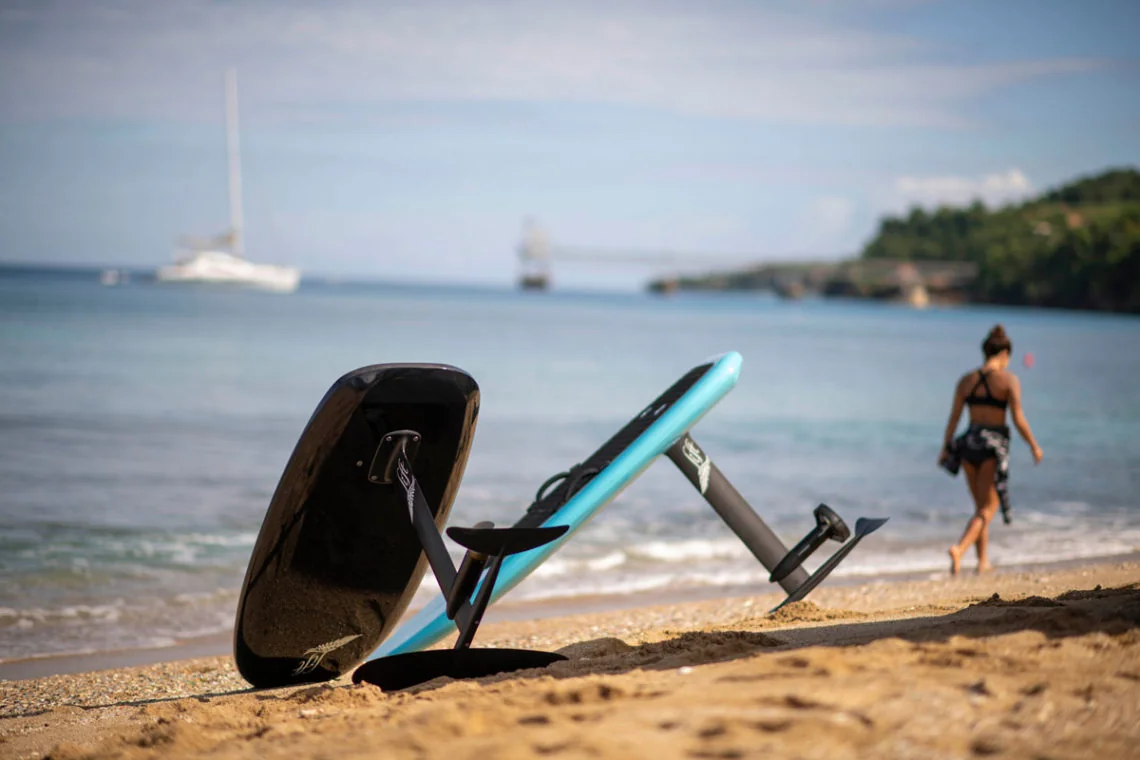
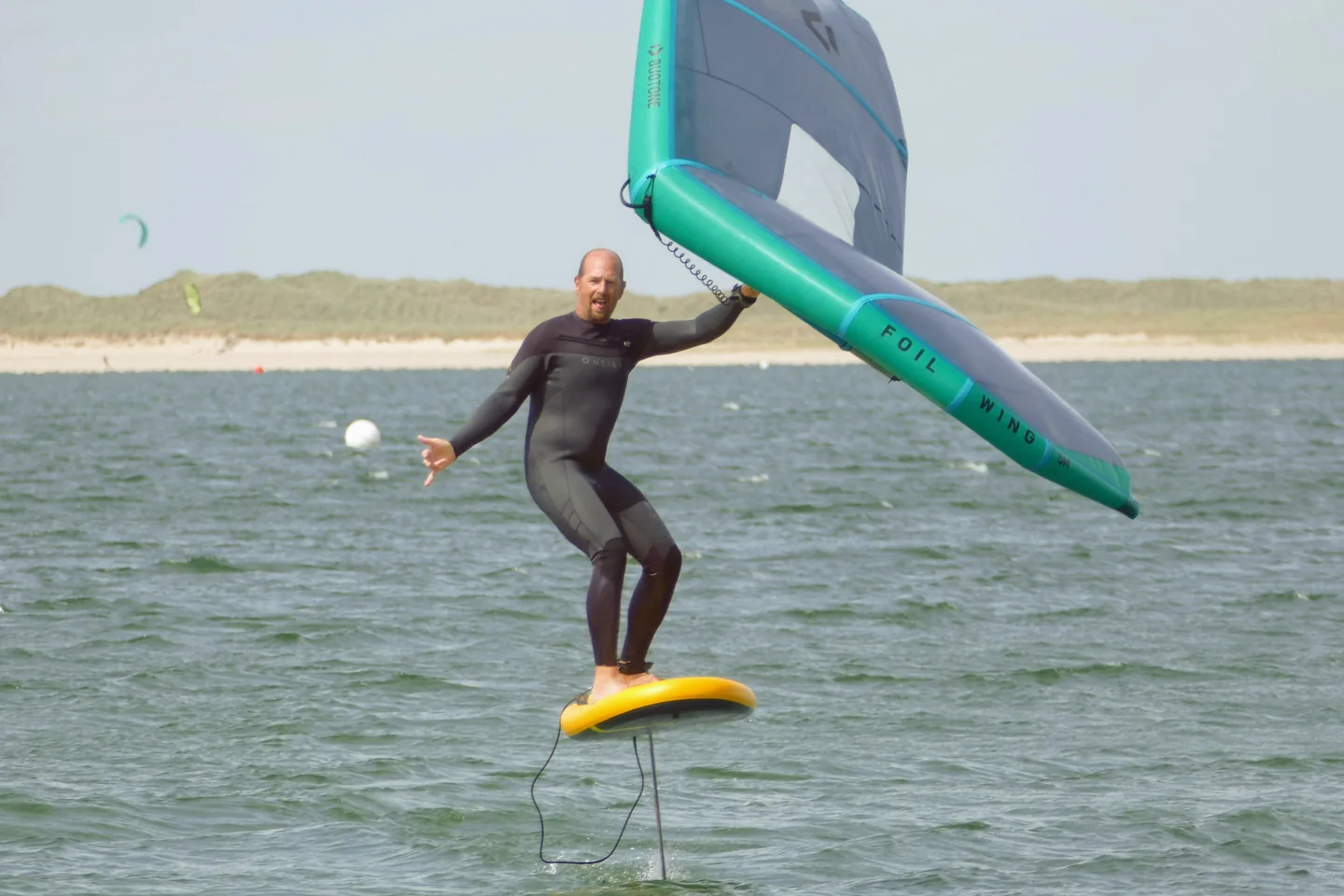
Wingfoil combines a hand-held wing with a board carrying a hydrofoil. Wind pulls the wing; water flowing over the foil produces lift and lets the board rise above the surface. The wing is separate from the board, unlike a windsurfing sail attached to a mast foot. Unlike kitefoil, there is no kite flying on long lines. An inflatable wing can also be used on a stable board without a foil, an introductory stage often called wingsurfing or wing-SUP.
What a first lesson can teach
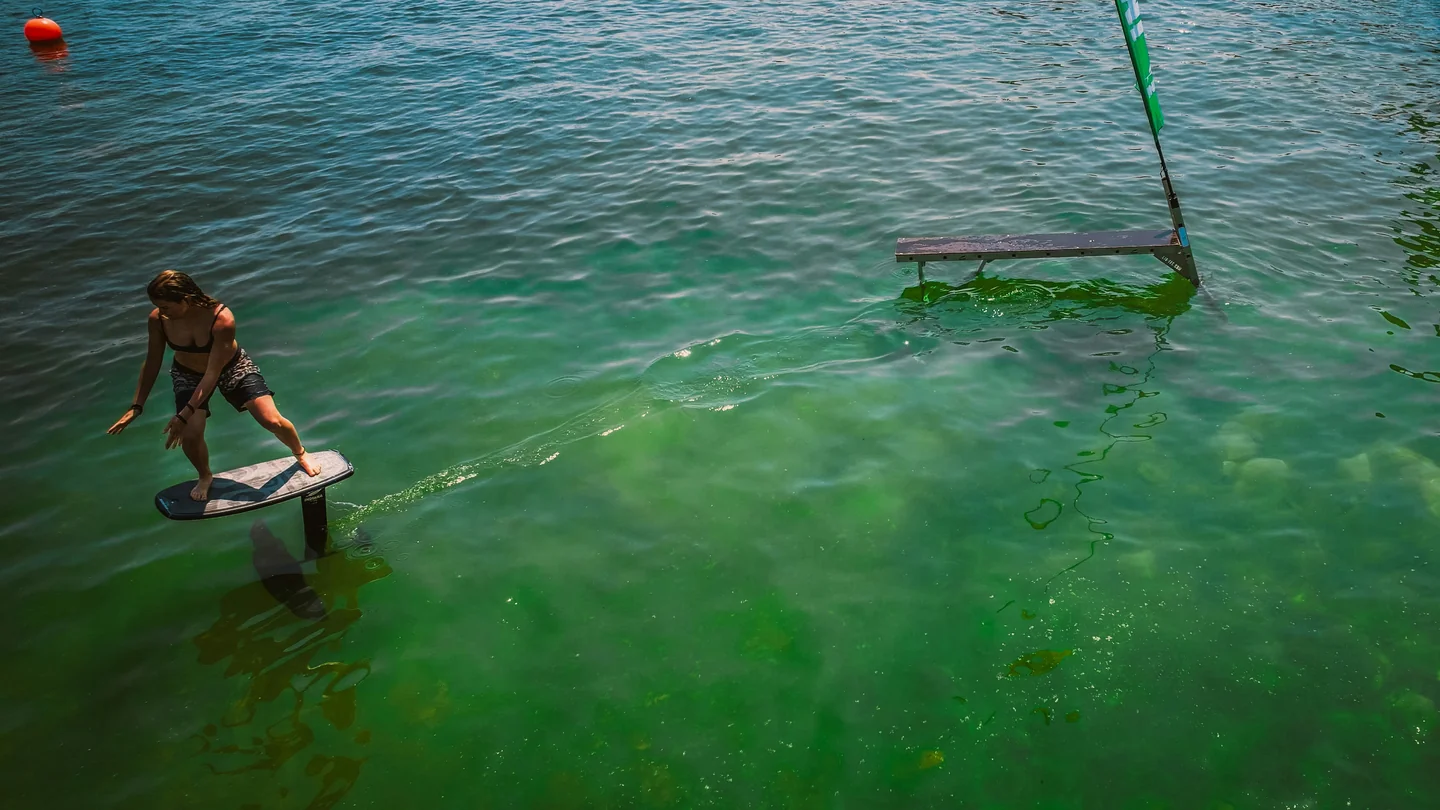
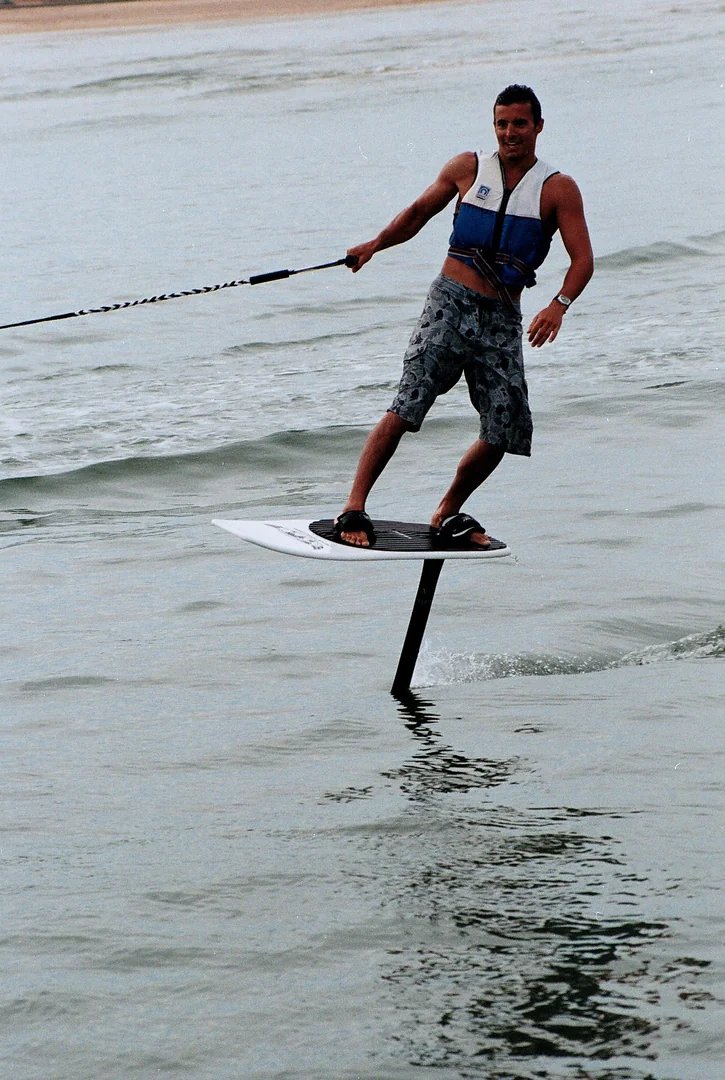
A useful beginner lesson separates wing handling from foil balance. Expect a land briefing, learning how to hold and depower the wing, then practising on a buoyant board. Some schools introduce foil control behind a boat before combining the two skills. Ask what the session actually includes and how much time each participant spends practising. Your first useful achievements may be steering, getting back on the board and returning to the starting area. Rising onto the foil is a later milestone, not an outcome a directory should promise.
Choose suitable wind and water
Steady wind, enough water beneath the mast and a manageable launch are more useful than the strongest forecast. Offshore wind, shorebreak, gusts and crowded bathing zones can make a seemingly attractive beach unsuitable.
When hiring equipment makes sense
Independent wingfoil hire normally requires more than standing briefly on a board. Discuss returning upwind, changing direction, handling a dropped wing and recovering safely before choosing unaccompanied hire.
Examples of centres to investigate
The Yacht Club Boulonnais advertises wingfoil instruction at Boulogne-sur-Mer. Centre Nautique de Bauduen lists both lessons and wingfoil rental, while AIRXKITE publishes courses and supervised riding around Cannes and Saint-Raphaël. These are examples to contact, not a guarantee of stock or weather. Coastal wind, lake levels, school opening periods and winter water temperatures can all alter the practical choice. Confirm arrangements for your exact travel dates.
Enjoy the spot with care
Wind supplies the riding energy, but the foil still needs clear water and careful handling. Give the instructor room to manage the group and follow the centre's approach to leashes and separation.
Do I need previous windsurfing experience?
No universal prerequisite applies. Some centres accept complete beginners; existing wind or board skills may help. Describe your swimming ability and experience so the school chooses an appropriate starting stage.
Can I rent immediately after one lesson?
Only if the operator accepts your actual competence and the day's conditions. Supervised practice may be more suitable; completing a lesson does not automatically establish independent riding ability.
Is wing-SUP the same as wingfoil?
Both use a hand-held wing, but wing-SUP keeps a conventional board on the surface. Wingfoil adds a hydrofoil and requires separate control of lift and flight height.
Check before booking
- State your swimming confidence and previous wind or board experience.
- Ask whether the first stage uses wing-SUP, towing or wingfoil.
- Confirm the launch, depth and recovery plan for the forecast.
- Check the board volume and wing choice with the instructor.
- Choose independent hire only after the centre assesses your return skills.
Sources and references
Sources consulted on