Your first eFoil lesson: choose the session before chasing flight
An eFoil uses electric propulsion and a hydrofoil to lift its board. A well-chosen first lesson starts with the controls, suitable water and patient progression.
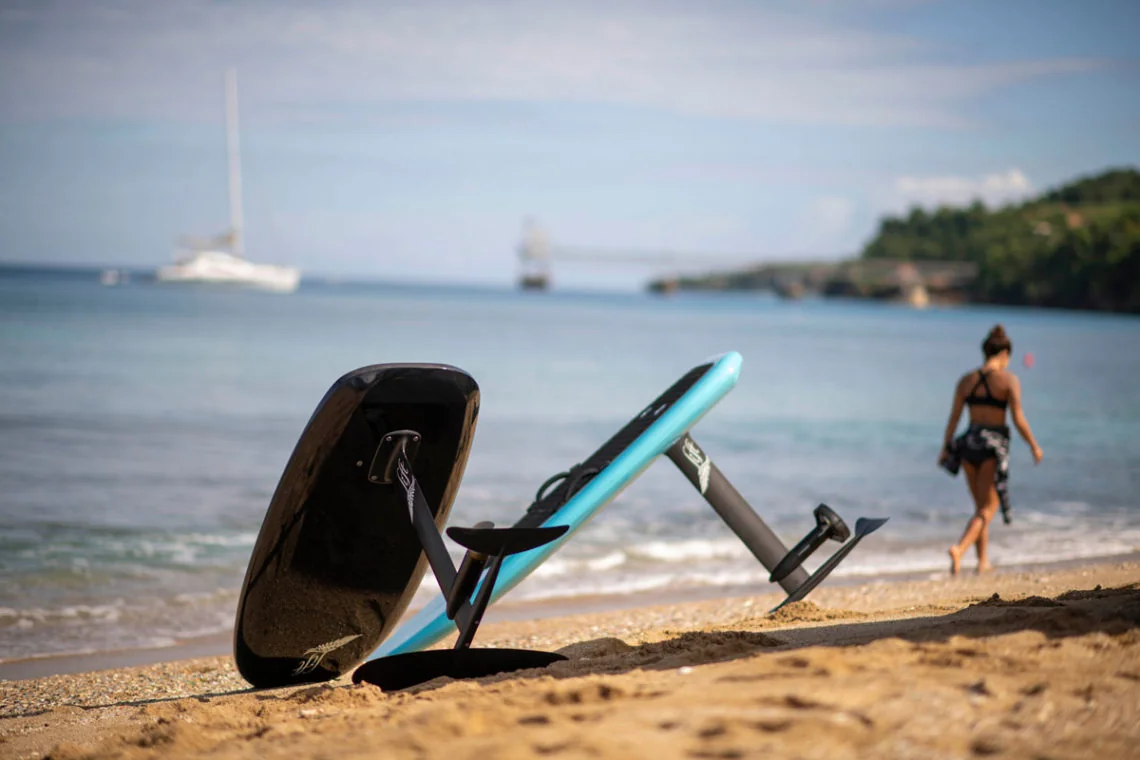
A first eFoil lesson introduces powered movement and a new balance. Choose a clear teaching format and appropriate conditions, with progress guided by the instructor and the learner.
Understand the lift and choose your lesson
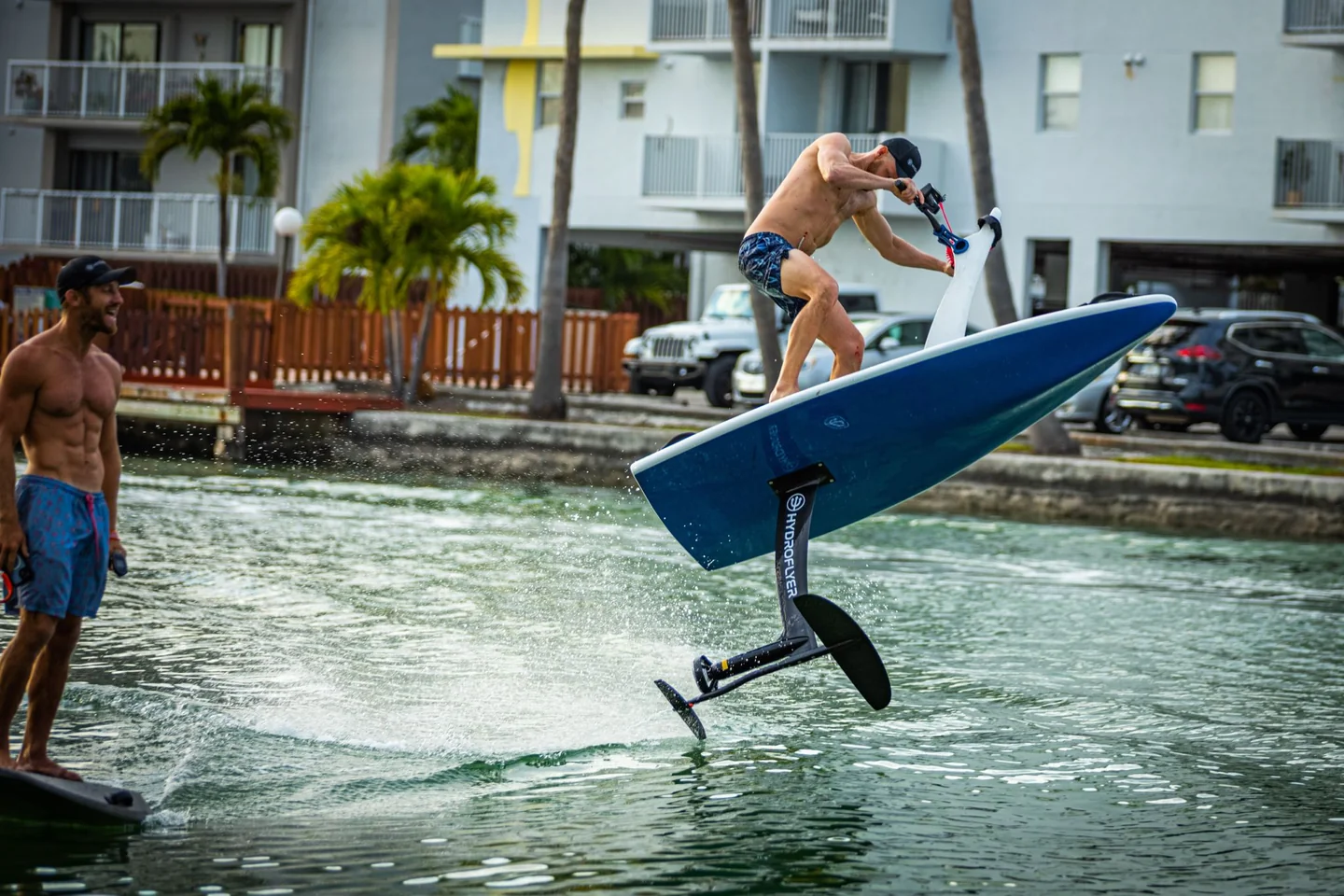
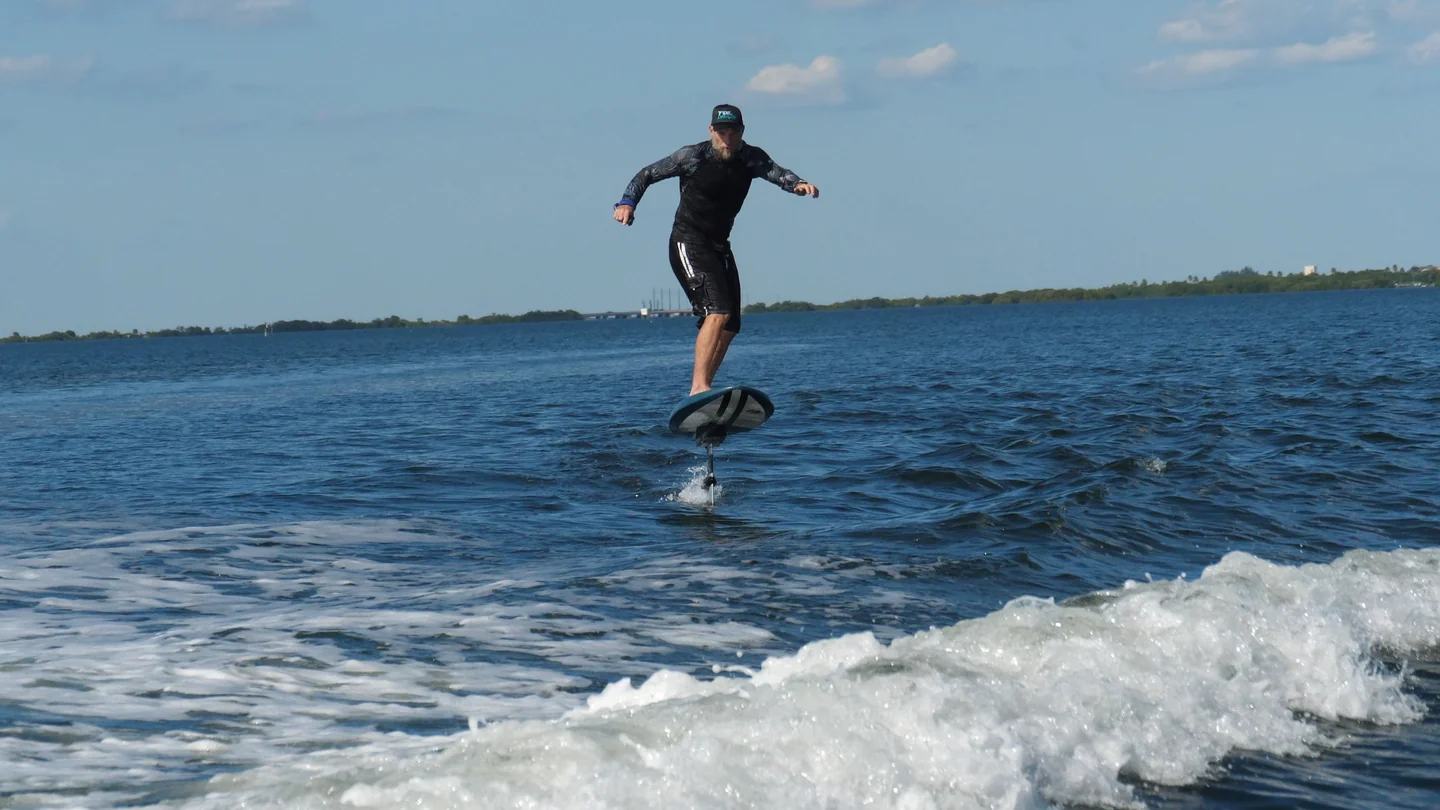
An eFoil combines a board, a mast and hydrofoil beneath it, electric propulsion and a battery. On common models the rider manages power with a handheld controller. As speed and balance allow, the foil generates lift and the board can rise above the surface. This distinguishes it from a powered board that remains on the water, and from wingfoil, where the rider uses a handheld wing to harness wind. For a holiday introduction, the relevant question is how the school teaches its actual equipment, rather than the top speed shown in a manufacturer's advertisement.
A first session is an introduction to power management and balance, not simply the temporary use of a board. Look for a provider that explains supervision, communication and the progression it offers beginners. Ask where the session takes place and how the area is selected for depth, other water users, wind and surface conditions. Motorised propulsion does not remove those constraints. A sheltered teaching area can still be unsuitable on a particular day. Describe your experience honestly and let the instructor decide the starting format and equipment. Avoid building your plans around a promised first flight within a fixed number of minutes.
A realistic first-session sequence
Expect an explanation ashore before entering the water. The instructor should show the controller, starting and stopping procedures, the position of the mast and foil, and the model-specific instructions for falls and recovery. On-water exercises can develop progressively from a low position toward standing and controlled lift, according to the learner and the school's method. Ask whether the booked duration includes the briefing and how much time each person actually uses a board. Several participants in a session do not necessarily mean several boards. Treat small improvements in controlled movement as worthwhile progress even if sustained flight comes later.
Cavalaire as a verified example
Session Gliss publishes eFoil initiation and improvement sessions in Cavalaire-sur-Mer and states that an instructor accompanies the session. It also lists other watersports, so make sure the activity you are discussing is specifically eFoil. This is a documented example of a lesson offer, not a guarantee of a slot, teaching language or operating season. Recheck those details for your travel dates. Ask how the team reschedules unsuitable weather and whether the format is individual or shared. The surrounding holiday itinerary can then remain flexible if the instructor changes the proposed water time.
Equipment questions worth asking
Find out which board and propulsion configuration are used for beginners and how the school selects them. Battery endurance varies with setup and use; a manufacturer's maximum is not the same as your lesson's actual riding time. Ask who handles batteries and equipment ashore, what protective and flotation equipment is supplied, and what you need to bring. Clarify how communication works while you are separated from the instructor. Follow the school and manufacturer's instructions for the exact model instead of generic advice from a video. Keep filming arrangements secondary to learning the controls and recognising the boundaries of the practice area.
Decide whether it fits your holiday
Choose eFoil when learning a powered board appeals more than simply travelling from one place to another. Ask the operator about participant requirements, total duration, shared-board arrangements, insurance terms, deposit and weather policy before comparing prices. Mention anything relevant to boarding, returning to shore or understanding instructions so the team can assess the proposed session. Observe the site's rules and avoid wildlife, swimmers and restricted areas. If your main aim is a social tour with frequent stops, compare another craft before committing. If the learning process itself is the attraction, a clear teaching plan makes a more useful promise than spectacular promotional footage.
Does eFoil require wind?
Electric propulsion provides power; wind is not the driving source. Wind and water conditions still affect whether a lesson can operate.
Will I fly in the first lesson?
Progress differs between learners. Ask about the teaching sequence without expecting a guaranteed result.
Does advertised battery endurance equal my riding time?
No. Endurance depends on setup and use. Your lesson may also include a briefing or turns on a shared board, so ask for actual riding time.
Check before booking
- Confirm the activity is specifically eFoil.
- Ask about actual board time per person.
- Understand instructor communication on the water.
- Check equipment and the shore briefing.
- Allow flexibility for weather changes.
Sources and references
Sources consulted on