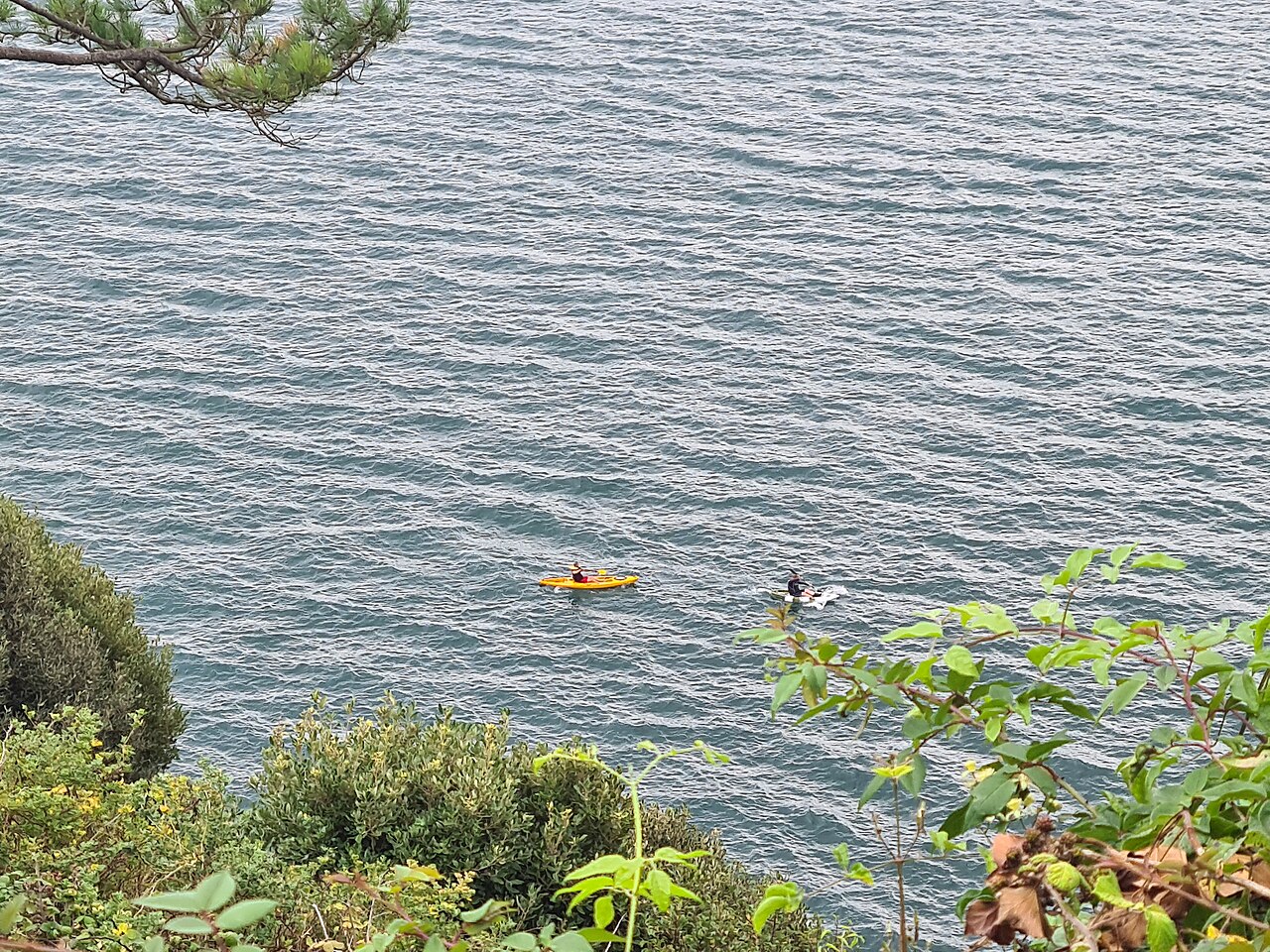
Kayak paddling: basic technique to ask for in a lesson
Moving forward, slowing down and turning: skills to practise during an introduction, with corrections using the actual equipment.

A first introduction should help you steer the kayak, rather than merely exert yourself. First find a comfortable position and a suitable paddle grip, then practise movements for propulsion, slowing and turning. Learning takes place in the instructor’s chosen area, with short attempts and feedback on what you just did.
Adjust your position and recognise the paddle
Have your seating and supplied paddle length checked. Identify blade shape and orientation with the instructor. Some blades are symmetrical, others not; colour does not establish orientation. An overly tight grip and uncomfortable adjustment can complicate learning. Ask for correction before trying to accelerate.
Understand what moves you forward
REI describes propulsion in three phases: blade entry, action in the water and exit. Torso rotation contributes to the stroke; pulling only with the arms is not the aim. Have this movement demonstrated with your equipment and try it gently. The instructor can then correct an observable detail, such as blade orientation or a stroke continued too far.
Learn to slow down and change direction
A forward stroke alone is insufficient for managing an approach. An introduction should also demonstrate braking and directional strokes with a clear practice space. Ask to perform these separately before combining them. If the kayak has a rudder or skeg, have their role explained rather than using them to conceal a misunderstood movement.
Observe concrete progress
A useful question is not only ‘Am I doing it right?’ but ‘What should I change on the next attempt?’ Use simple objectives with the instructor.
- Move towards the chosen reference point at a pace that allows you to hear instructions.
- Slow down on request before approaching other craft.
- Change direction to both sides within the exercise area.
- Repeat a short sequence after correction without immediately seeking more speed.
Match rhythm to the group and tandem
Pay attention to boats around you and agreed signals. Appropriate spacing depends on the exercise and group organisation: do not crowd the kayak ahead to follow its line. In a tandem, agree rhythm and how to announce a change. If a signal is unclear, ask for clarification rather than compensating with more effort.
An example enquiry for a first session
Fictional example: you move forward but the kayak turns unintentionally. The instructor observes a few strokes, gives a correction and has you retry over a short distance. Compare the result rather than randomly adding force. To book an introduction, ask: ‘Can we learn to move forward, slow down and turn, then have our grip and posture corrected?’ Stated content is more useful than the word ‘beginner’ alone.
Check before booking
- Position and paddle are checked with the instructor.
- Moving forward, slowing and turning form part of practice.
- A specific correction is tested on the water.
- Group signals and rhythm are understood.
Sources and references
Sources consulted on