Handlebar efoils: choose your first session
Flitescooter and Hydroflyer combine electric power, underwater wings and handlebars. Learn what separates them from surface scooters and how to prepare for a first session.
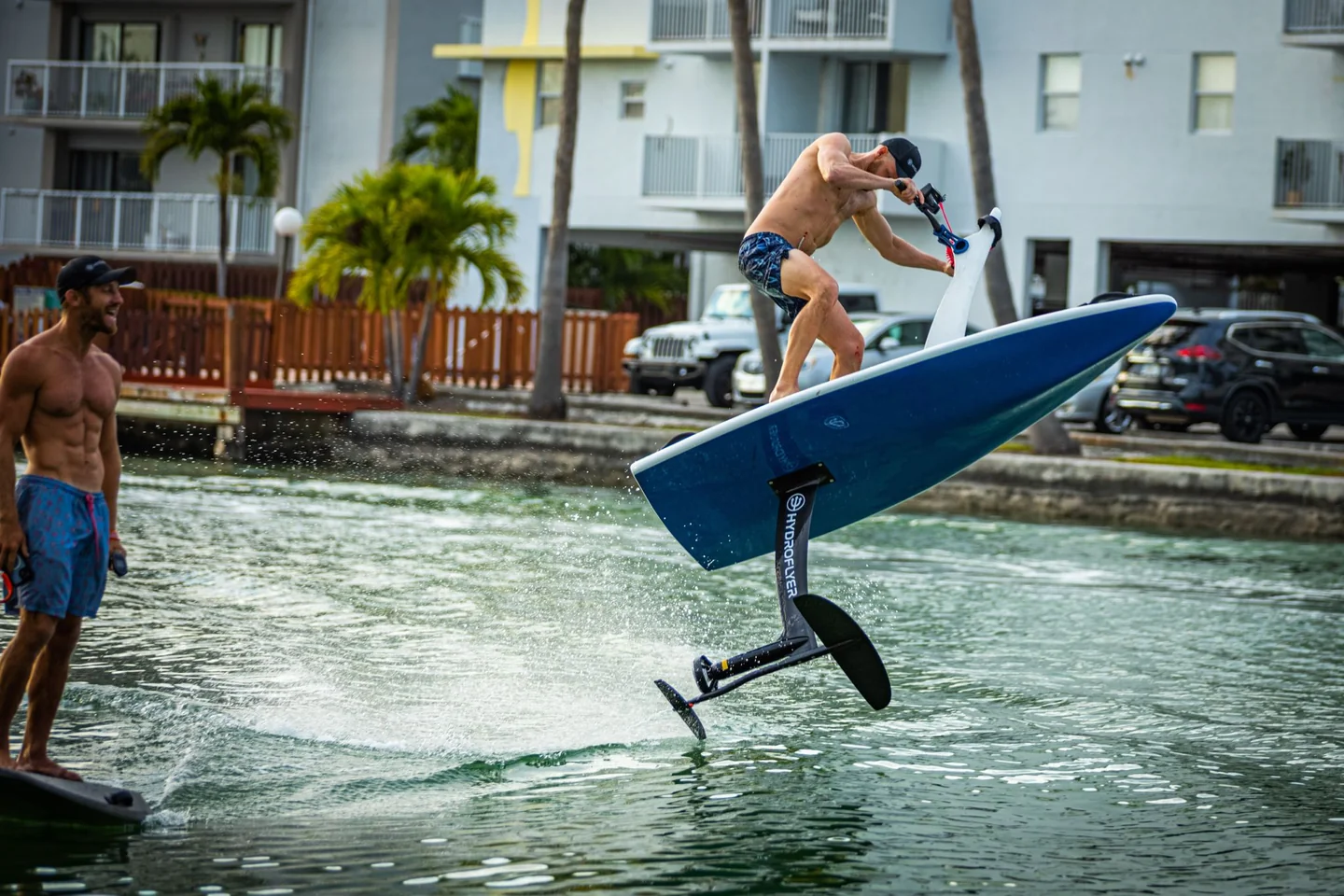
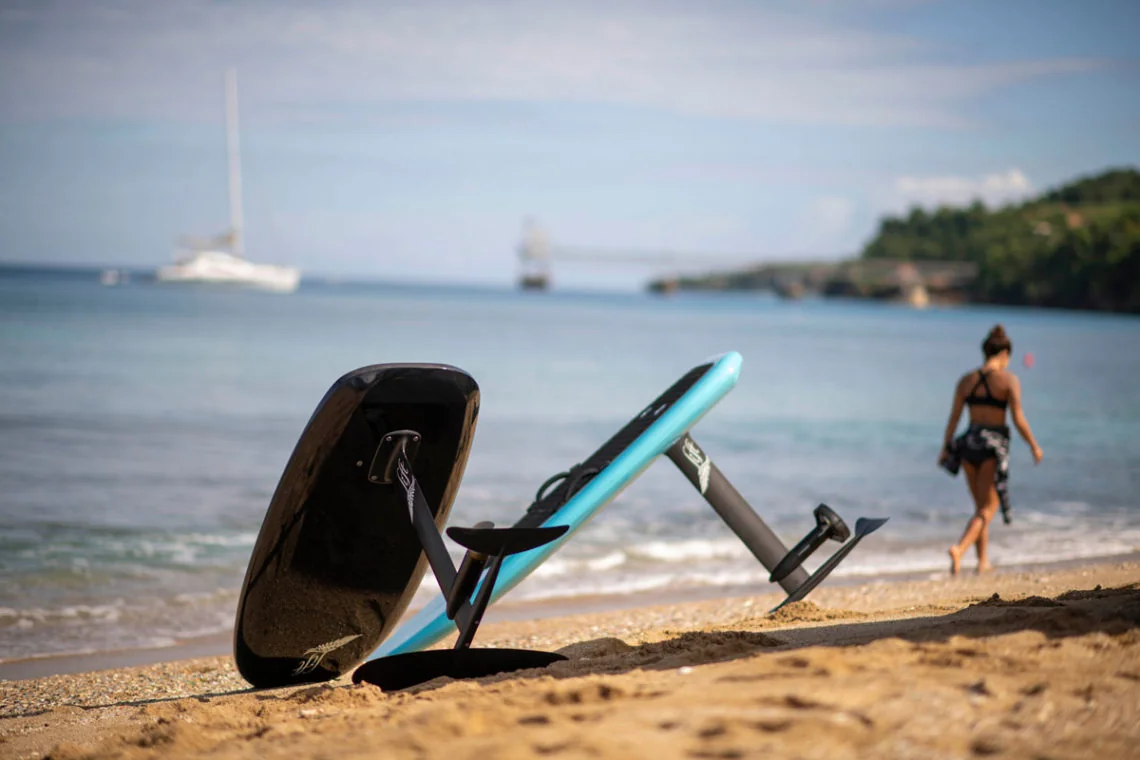
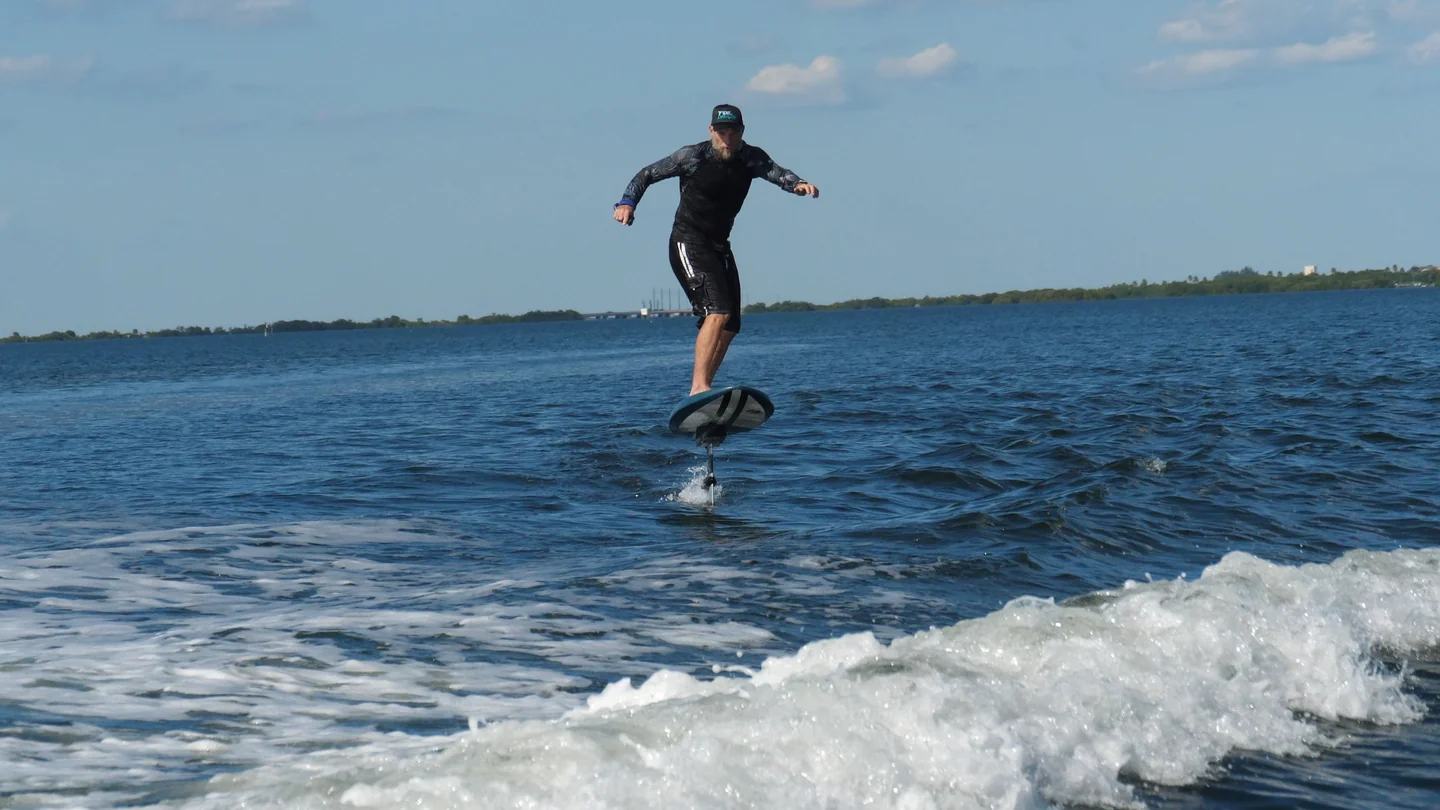
A handlebar efoil is an electric board with a mast and submerged wings, plus handlebars for support and model-specific controls. Motor power builds forward speed, allowing the foil to lift the board above the surface. The bars add contact points; they do not remove the need to learn balance. Fliteboard’s Flitescooter and the Hydroflyer range are examples of this family, with different constructions and procedures. A rental enquiry should identify the exact product rather than treat the names as interchangeable.
Know the equipment before you book
Flitescooter uses a platform with an inflatable outer and removable handlebars. Hydroflyer offers several handlebar-equipped configurations. These are distinct from a water scooter that remains on the surface without a foil, and from a handheld underwater propulsion device. If the description is unclear, ask for a photograph of the actual rental unit and confirmation that it has the foil arrangement you want. The familiar shape of the handlebars does not determine how the craft turns.
Your first session, step by step
A first session should explain power control, stopping, body position, ride height and what to do during a fall. Space below the water matters as much as space ahead. Let the operator select a sufficiently deep and clear teaching area. Handlebars do not replace suitable equipment or supervision, and they do not guarantee that every beginner will fly on the first attempt. Ask how the session progresses if you need more time practising at surface level.
Have the instructor identify the actual accelerator, stopping system and any safety key before entering the riding area. On Flitescooter, Fliteboard describes steering through weight transfer; the familiar bars should not be treated as a bicycle wheel steering mechanism. A Hydroflyer needs its own explanation. Ask for the procedure belonging to the particular rental unit.
Questions that make a rental easier
The submerged mast and wings remain important when the motor is stopped. Ask how the operator handles launch, landing and remounting so you understand where the foil is relative to your body. Suitable depth is a venue decision, not something inferred from calm-looking water. The bars provide support but do not eliminate falls or foil awareness.
Compare a supported first lesson with an unsupervised equipment handover. Ask whether the instructor stays close, how the riding boundary is marked and what happens when the battery reserve is reached. Confirm whether the handlebars remain fitted throughout your session. Removing them changes the product you were seeking and should not be assumed from a promotional picture.
Verified starting points and considerate use
SEAandFLY advertises Hydroflyer rental at Port Méditerranée in Six-Fours-les-Plages, France, with a season running from 1 May to 30 October 2026. Its offering includes a briefing and experience sessions in Provence. Confirm the precise departure point, equipment, supervision and conditions for your date. Manufacturer pages help explain the machines; a product catalogue or dealer listing should not be read as a currently available rental appointment, either there or in another destination.
Electric assistance does not remove local restrictions on powered equipment. Keep the handlebar efoil in the area the operator has approved, away from swimming zones and wildlife. Use its chosen launch rather than carrying the foil through shallow vegetation or setting the wings on a fragile bank. Quiet running is not permission to approach animals. Ask the base about local exclusions and follow its handling and cleaning process after the session.
Does a handlebar guarantee no falls?
No. It adds contact points, while balance, power control and ride height still need learning. Ask how falls are handled in the lesson.
Is this the same as a water scooter?
Only if the description specifies the same equipment. A surface scooter without mast and wings is not a handlebar efoil.
Do I turn the bars like a bicycle?
Ask for model-specific instruction. Fliteboard explains weight-transfer steering for Flitescooter; familiar-looking handlebars do not establish bicycle-style steering.
Check before booking
- Identify Flitescooter or Hydroflyer
- Confirm the actual unit has foil and handlebars
- Check water depth and a clear teaching area
- Learn stopping and fall procedures
Sources and references
Sources consulted on