Parawing: compact wing, demanding foil skills
A parawing can pack away during a foil ride, but managing its short lines and relaunch takes practice. Find out what to ask a school before lessons or rental.
Parawing attracts foil riders who like the idea of putting their wing away and continuing with the energy of the water. That freedom depends on skills built before the canopy disappears into its pouch. Choosing a lesson means checking your foil foundations and learning a new way to manage the wind. This guide helps you compare actual school offers without assuming that compact equipment means a shorter beginner progression or automatic readiness for a downwind trip.
A soft canopy on short bridles
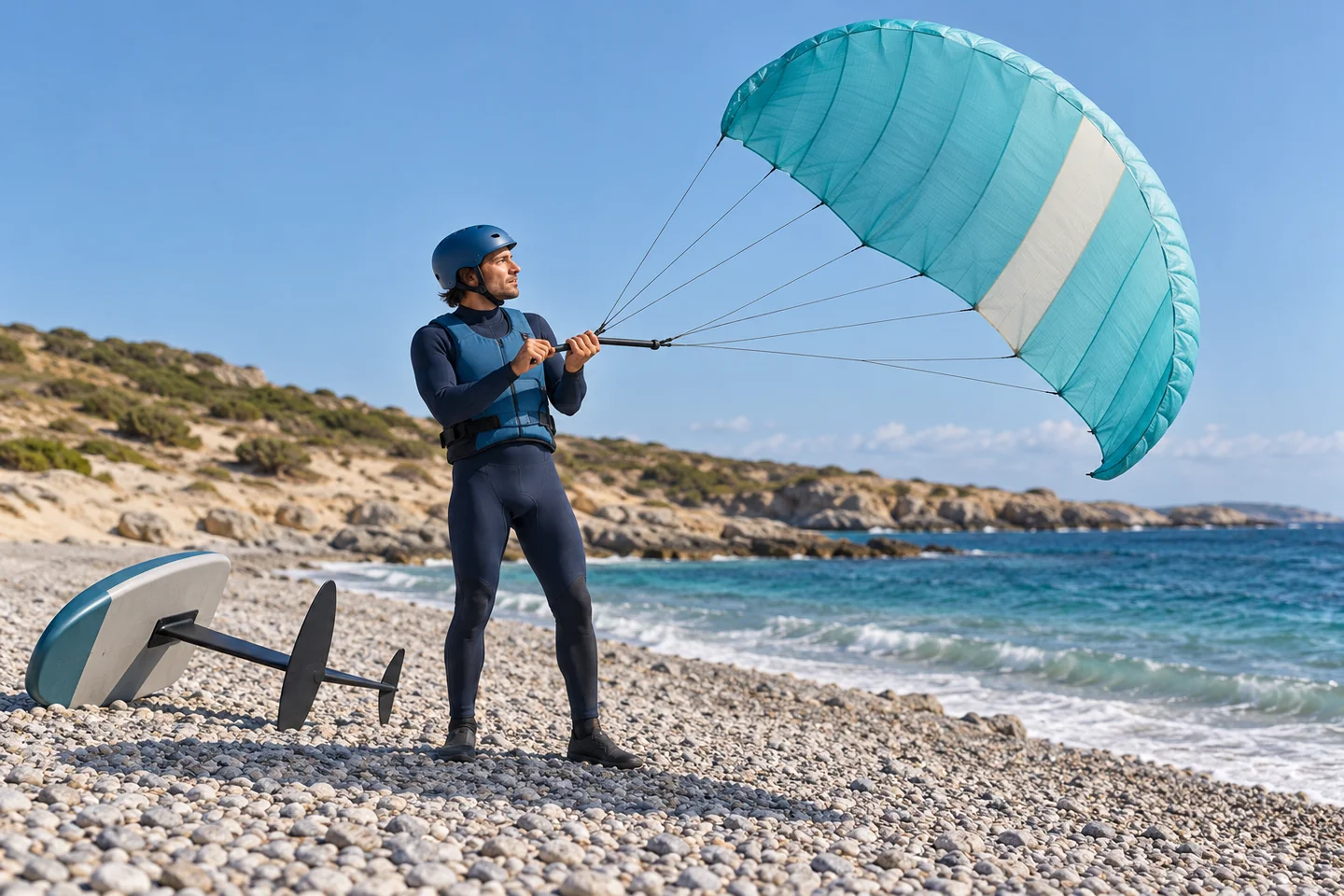
A parawing uses a light, uninflated canopy connected to a small control bar by short bridles. Wind provides the pull for a foil board. Unlike a rigidly framed or inflatable handheld wing, the canopy can be gathered and stowed so an experienced rider can continue on swell without holding a full wing. It is also different from a conventional kite flown on long lines. Compact packing is an attraction, but it adds canopy gathering, line management and relaunch skills to the usual tasks of controlling a foil.
Build on existing foil control
Treat a first parawing lesson as learning a new control system. Schools may begin with canopy handling, sorting the bridles, depowering and recovering the wing before attempting linked riding. Existing confidence on foil helps free your attention for these tasks. MF Kite explicitly asks for independent wingfoil ability; other schools set their own entry requirements. A complete watersports beginner should discuss a foundation course instead of assuming the smaller canopy is an easier route. Downwind travel and stowing in waves belong to a later, separately assessed progression.
Wind and recovery decide the session
Consistent wind and a reliable return or recovery arrangement are crucial while learning. A canopy that packs small does not solve offshore drift, shorebreak, tangled bridles or the difficulty of relaunching in unsuitable water.
Hire only after discussing your level
Describe your foil experience and ask whether the centre requires a lesson or assessment before rental. Confirm that the selected board, foil and canopy suit both your level and the local conditions.
Centres with published parawing offers
Duotone Pro Center Torbole publishes parawing lessons and rental at Lake Garda. Kawana advertises both at Saint-François, Guadeloupe, on the La Coulée lagoon. Adrenalin Kite Area lists a parawing offer at Tarifa, and MF Kite publishes tuition at Hyères. Contact the relevant school about seasonal wind, opening periods and your prerequisites. These published examples do not establish rental availability or the suitability of a particular downwind route.
Give lines, wildlife and other riders space
Keep short lines and loose canopy fabric clear of other people and wildlife, including on the beach. Stowing the wing changes what you carry, not your responsibility to maintain a safe separation.
Is parawing easier than wingfoil for a complete beginner?
Do not assume that. Canopy recovery and short-line handling add tasks while you control the foil. Ask the school whether it requires independent wingfoil skills or recommends another starting discipline.
Can every lesson include a downwind trip?
No. Route choice depends on skills, conditions, exits, supervision and recovery logistics. A first lesson may concentrate on wing handling and controlled riding near the teaching area.
Does a packable canopy replace a conventional wing?
It offers a different experience rather than a universal replacement. Compare relaunch, wind stability, stowing and your intended riding with the instructor before choosing equipment or committing to rental.
Check before booking
- Describe your independent foiling and return-to-shore ability honestly.
- Ask which canopy handling and relaunch skills the lesson covers.
- Confirm that board, foil and canopy fit the day's conditions.
- Agree a recovery plan before considering a downwind route.
- Check whether a lesson or assessment is required before rental.
Sources and references
Sources consulted on