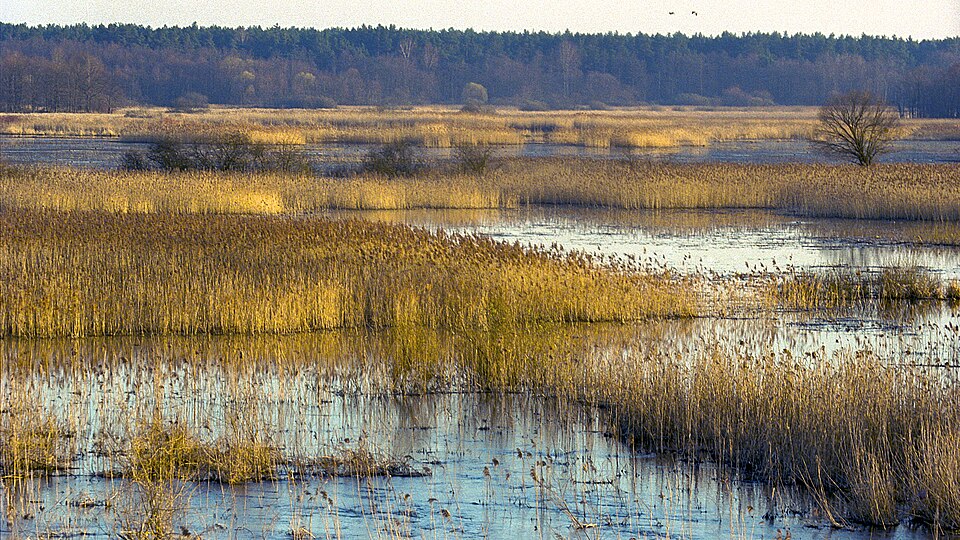
Kayaking in wetlands: watch wildlife without disturbing it
Identify channels, sensitive periods and landing options to observe a wetland from open areas without seeking to approach wildlife.

A quiet kayak does not make every passage accessible. Before an outing in marshes, a lagoon, estuary or reedbed, prepare the area you may actually paddle and how you will observe nature there. Success is not measured by proximity to a bird, but by exploration compatible with the habitat’s functioning.
Distinguish navigation, landing and observation
An area open to navigation may contain islands or shores where landing is prohibited. Observation from a path does not confirm water access either. Find the manager’s instructions for each action. On a map, identify usable channels, closed areas and the planned return. Do not add a shortcut through reeds between points that appear close.
Check periods and the source’s scope
The OFB explains aquatic areas’ sensitivity to visitor pressure and notably directs users to C-monspot for quiet areas on the French coast. This tool can supplement preparation for a coastal outing; it does not replace a manager’s information for an inland marsh. Check the municipality, activity and period concerned. A temporary breeding restriction must not be turned into unrestricted access during the rest of the year without further checks.
Understand why quietness alone is insufficient
C-monspot notes that repeated disturbance can accumulate and certain periods make animals more vulnerable. A kayak can therefore have an effect even without engine noise. For the birds and marine mammals covered by its advice, the site recommends passing around at a distance and states that distances vary by place. Taking flight or entering the water because of an approach already indicates being too close.
Prepare observation that does not depend on approaching
Choose an objective compatible with passing at a distance: viewing scenery, recognising a habitat or observing through binoculars from an admitted location. Do not promise the group a species, nest or animal visible at a given time. Avoid following retreating wildlife, blocking its passage or repeated attempts at a photograph. The manager’s stated limits take precedence over an image’s appeal.
An example with two different access arrangements
Fictional example: a map shows an open channel and a hide accessible on foot. Plan a short paddle in the first area, then land-based observation under the second’s rules. Do not draw a kayak connection to the hide merely because it is close to water. If navigation changes, the land alternative must also be checked rather than improvised in a closed area.
Prepare departure and return without leaving traces
Bring a container for taking rubbish away and use marked access points. C-monspot guidance notably asks users to avoid trampling fragile habitats during launching. On return, follow local equipment-cleaning instructions where provided. If you notice a problem, record place and time without moving closer to animals; ask the manager for the appropriate reporting channel.
Check before booking
- Navigation, landing and land access are checked separately.
- Local quiet areas and applicable periods are identified.
- The observation plan respects distance and open access.
- Rubbish, access route and return instructions are prepared.
Sources and references
Sources consulted on