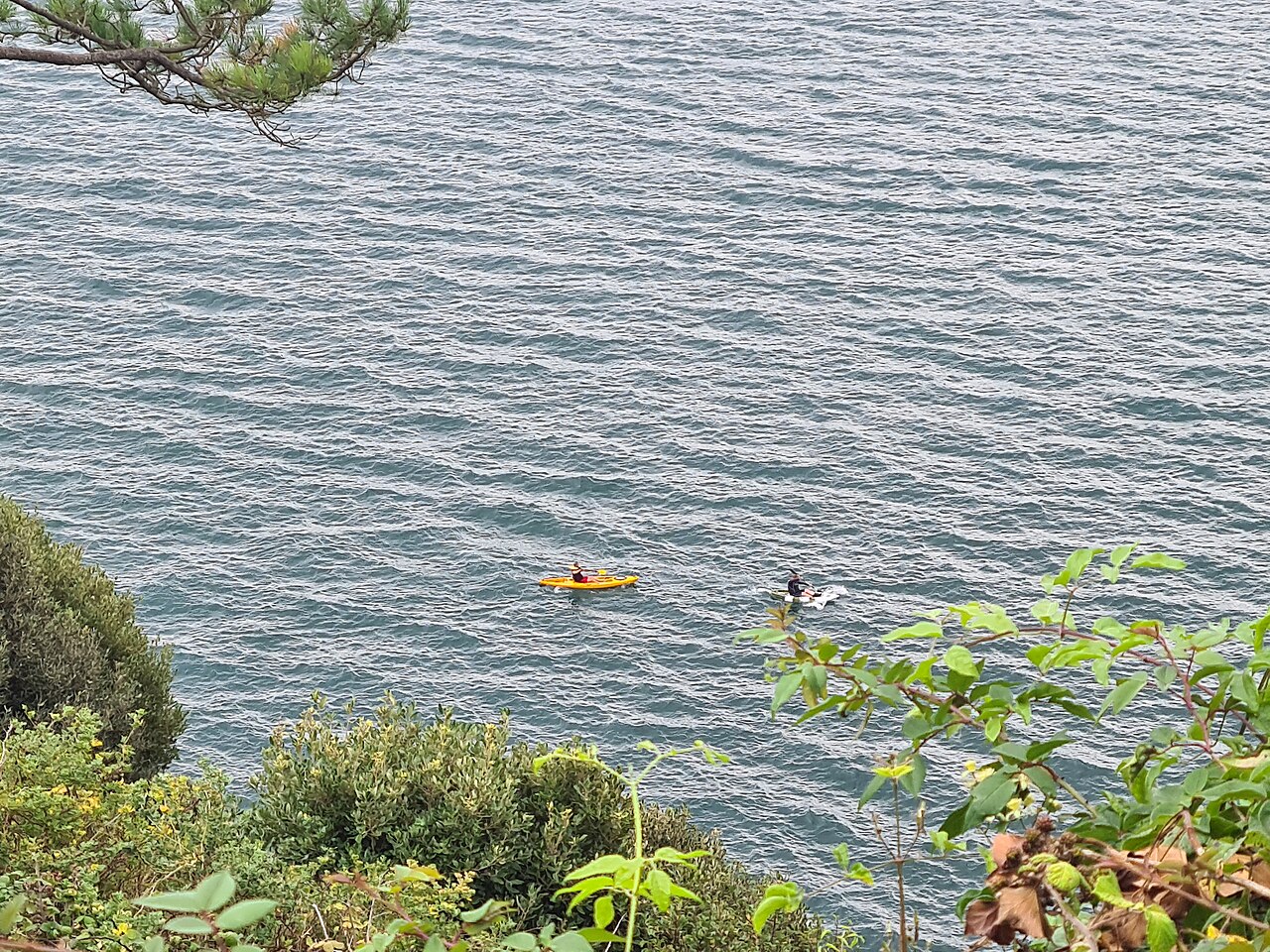
First sea-kayaking trip: what should you confirm?
Coastal area, guide presence, weather and return: prepare a first sea-kayaking outing with an explicit programme and limits.

A first sea-kayaking outing starts with a specific coastal programme. The destination name does not tell you which stretch you will cover or how you will return. Match your experience to the area, boat and planned professional support, rather than a photograph of calm seas.
Choose a format that states its support arrangements
Describe your actual experience, including if you have only tried kayaking on a lake. An introductory lesson, accompanied discovery outing and independent hire require different arrangements. Ask whether the professional stays with you on the water and what learning takes place before travelling.
The RNLI recommends appropriate kayaking training. For a first coastal programme, useful content includes boat control, instructions for difficulties and how to stay with the group.
Define the area and achievable objectives
Identify the start, intended programme and finishing point. An outing mentioning cliffs, islands or caves should specify what is actually planned and the alternatives. Seeing a destination from the water does not mean landing or entering is permitted.
Ask how the team adapts the programme when conditions prevent the original route. This information forms part of choosing the offer: it distinguishes an exploration objective from a guaranteed visit.
Know which sea information to check
The RNLI highlights checking weather, sea state and relevant tides. French public guidance adds the importance of nautical information and local rules; its scope remains France. For your stay, use the competent sources for the country and area.
- Wind: direction and changes during the time slot, rather than only a general figure.
- Sea and currents: factors considered for the route by the team.
- Tides: the local reference where relevant to the outing.
- Notices and access: recent information from the manager or competent authority.
Have equipment and alert arrangements explained
Try the items supplied and report any adjustment you do not understand before boarding. Clarify clothing and storage arrangements. Fine weather on land is not enough to decide what to wear on the water.
Check how to report a problem to the instructor and what means of raising the alarm remains accessible. The stated arrangements must match your service: another kayaker’s equipment or a video does not describe what will be present at your departure.
Understand the return before leaving
Ask who decides to shorten the outing, turn back or postpone, and how instructions will be communicated. The plan must include the entire group. Do not decide to continue towards a photographed destination outside the updated programme.
REI recommends an itinerary and outing plan suited to participants’ skills. These principles do not replace local knowledge: identify the return instructions actually explained by the team.
An example of an adaptable programme
Fictional example: you book a coastal discovery outing whose programme mentions a headland, with an alternative area if needed. Confirmation concerns the service and its conditions; it does not promise passage around the headland regardless of sea state.
Before travelling, obtain the meeting details and the channel used to confirm whether the outing goes ahead. At the venue, listen to that day’s programme and check you understand the instructions, even if you have already read a presentation of the outing.
Check before booking
- The area, format and on-water presence are defined.
- Relevant sea information and current notices are identified.
- Equipment, communication and return instructions are explained.
- Possible programme adaptations are understood.
Sources and references
Sources consulted on